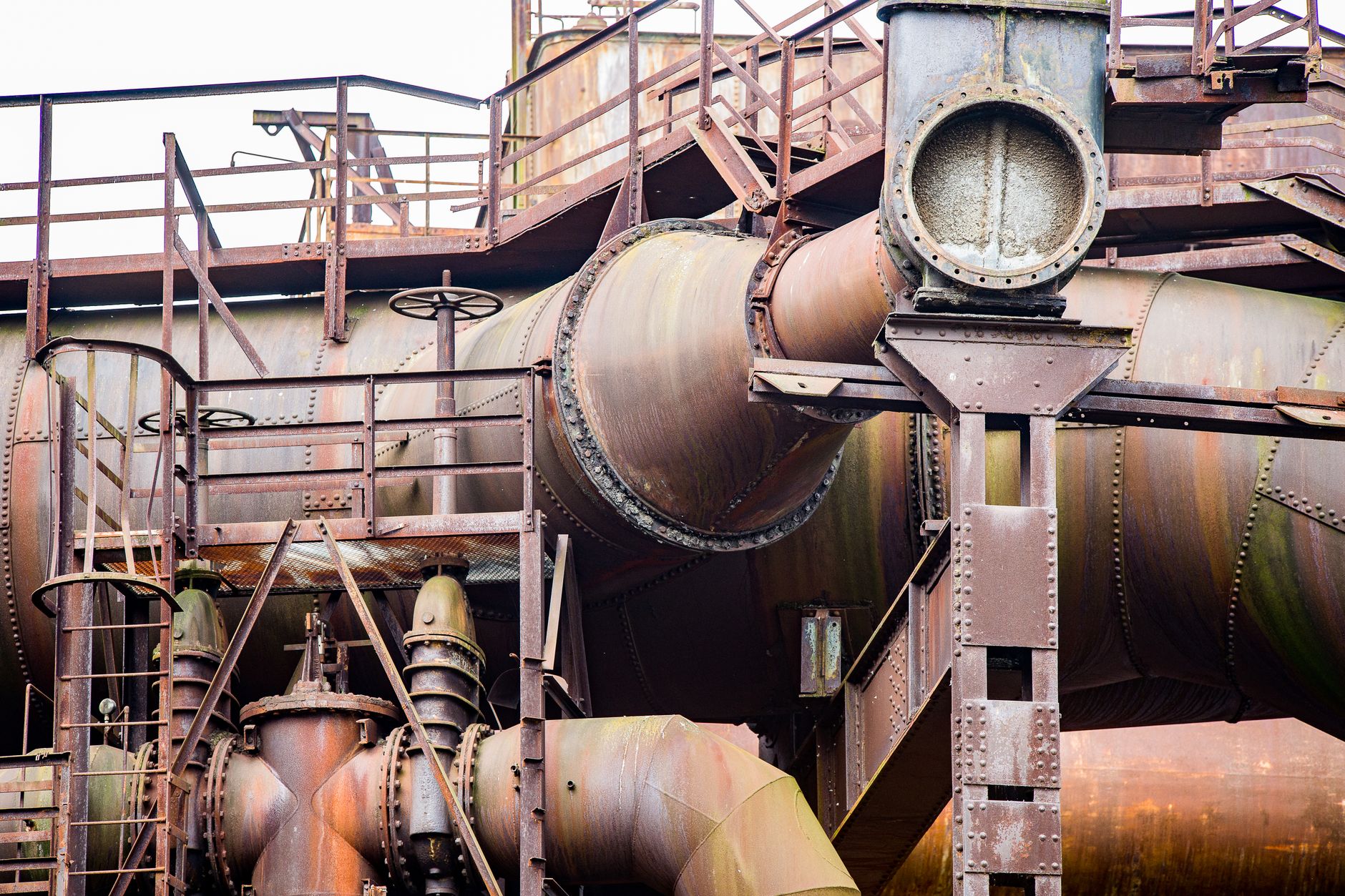
Pipe failures hardly ever occur with out warning. Behind each cracked weld or ruptured spool piece lies a narrative of stress, vibration, and time. When a pipe fails resulting from fatigue, the results can vary from pricey downtime to severe security incidents. Understanding why fatigue failures happen is step one towards stopping them.
On this article, we’ll stroll by the foundation causes of commercial pipe fatigue failures, the strategies engineers use to diagnose them, and the sensible steps you’ll be able to take to guard your piping techniques.
What Is Pipe Fatigue Failure?
Fatigue failure happens when a cloth cracks below repeated or cyclic loading, even when the stress ranges are properly beneath the pipe’s yield power. In contrast to a single overload occasion, fatigue develops step by step. Every cycle of stress weakens the fabric a little bit extra till a crack initiates and propagates.
In industrial settings, this cyclic loading normally comes from vibration, thermal growth and contraction, stress fluctuations, or mechanical motion. Over 1000’s or thousands and thousands of cycles, the pipe merely wears out on the microscopic stage.
Fatigue failures are harmful as a result of they usually give little seen warning. A pipe can look completely superb someday and leak the following.
Widespread Root Causes of Pipe Fatigue Failures
Figuring out the foundation trigger requires wanting past the failed element itself. Fatigue is normally a symptom of a deeper system situation. Listed below are the commonest culprits:
- Vibration from rotating equipment: Pumps, compressors, and generators transmit vibration into linked piping. If not correctly remoted, this fixed shaking fatigues welds and helps.
- Stream-induced vibration: Excessive-velocity stream, slugging, or cavitation may cause pipes to vibrate. Small-bore connections are particularly susceptible.
- Thermal biking: Repeated heating and cooling causes growth and contraction. If the piping lacks flexibility, stress concentrates at restrained factors.
- Poor help design: Lacking, misaligned, or worn helps permit pipes to maneuver excessively, accelerating fatigue at joints.
- Stress pulsation: Reciprocating pumps and compressors create stress waves that flex pipe partitions with each stroke.
- Weld defects: Undercuts, porosity, or lack of fusion act as stress risers the place cracks start.
- Resonance: When the pure frequency of a pipe span matches an excitation frequency, vibration amplifies dramatically.
In lots of instances, fatigue outcomes from a mix of those elements quite than a single trigger. That is why a structured root cause analysis is important.
How Engineers Diagnose Fatigue Failures
A correct root trigger evaluation (RCA) follows a scientific method. The purpose is not only to elucidate what failed, however to forestall it from taking place once more.
1. Visible and Fractographic Examination
Fatigue fractures have a attribute look. Engineers search for seaside marks (concentric ridges exhibiting crack development) and a ultimate overload zone. Scanning electron microscopy can affirm the failure mode and establish the crack initiation level.
2. Vibration and Stress Measurement
Area measurements utilizing accelerometers and pressure gauges reveal how a lot the pipe is definitely transferring. Evaluating these readings to design limits helps pinpoint drawback areas.
3. Piping Stress Evaluation
Utilizing instruments like CAESAR II, engineers mannequin the piping system to judge flexibility, help placement, and thermal hundreds. This identifies areas the place stress exceeds acceptable ranges.
4. Working Knowledge Overview
Historic knowledge on stress, temperature, and stream can reveal biking patterns. For instance, frequent startup and shutdown cycles usually correlate with fatigue failures.
5. Metallurgical Testing
Hardness testing, chemical evaluation, and microstructure examination affirm whether or not materials points contributed to the failure.
Preventive Measures That Truly Work
As soon as the foundation trigger is recognized, corrective actions ought to deal with each the symptom and the supply. Efficient methods embody:
- Enhance help and restraint design to restrict motion and soak up vibration.
- Set up vibration isolators or dampers between tools and piping.
- Improve piping flexibility with growth loops, bellows, or directional adjustments.
- Cut back flow-induced vibration by adjusting velocities or including stream straighteners.
- Improve weld high quality by higher procedures, inspection, and certified welders.
- Carry out common vibration monitoring as a part of a predictive upkeep program.
- Keep away from resonance by adjusting span lengths or including mass to shift pure frequencies.
Prevention is at all times cheaper than restore. A small funding in evaluation and monitoring can keep away from catastrophic failures and lengthen the lifetime of your piping techniques.
Conclusion: Flip Failures Into Classes
Root trigger evaluation of pipe fatigue failures is greater than a autopsy train. It is a possibility to strengthen your whole piping system and forestall future incidents. By understanding the mechanisms behind fatigue—vibration, thermal biking, poor help, and weld defects—you’ll be able to design, function, and keep your techniques extra reliably.
At Silver Eagle Industries, we assist industrial groups diagnose failures, carry out stress evaluation, and implement lasting options. Whether or not you are coping with a recurring leak or wish to stop one, our engineering consultants are prepared to help.
Contact us at present to schedule a piping integrity evaluation and take step one towards a safer, extra dependable operation.