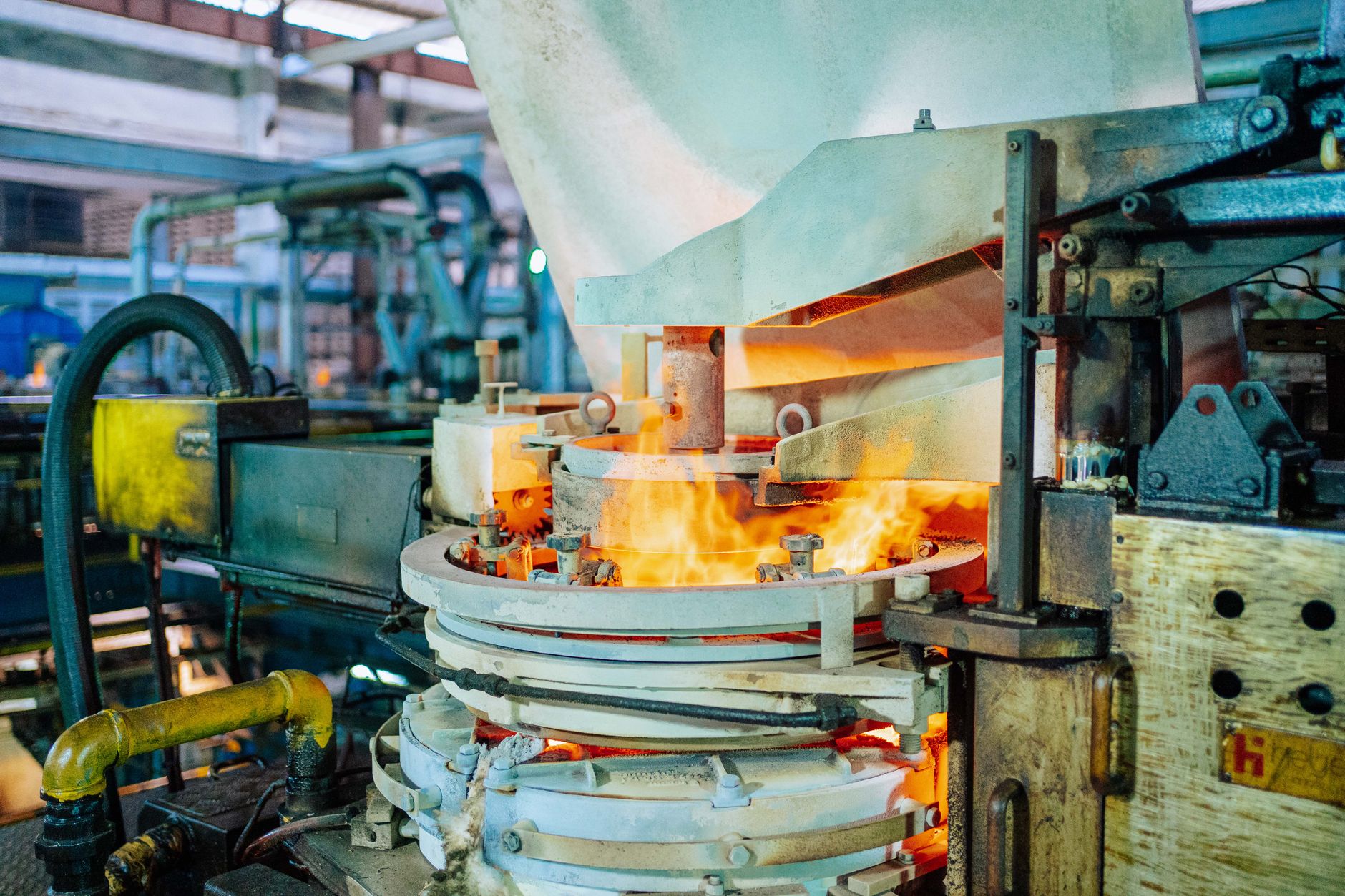
Bearings are the quiet workhorses of industrial machinery, but in high-temperature environments they often fail far sooner than their rated life suggests. Understanding why premature bearing failure occurs in these demanding conditions is essential for maintenance teams, plant engineers, and anyone responsible for equipment reliability. This article breaks down the most common causes and shows you how to protect your bearings and your uptime.
How Heat Quietly Destroys Bearing Performance
Heat is the single most influential factor in bearing life, and its effects compound over time. Every bearing has a recommended operating temperature range, and exceeding it accelerates wear in ways that are not always visible until failure occurs. In high-temperature applications, the margin for error shrinks dramatically.
When temperatures rise, lubricants degrade faster, clearances change, and materials lose strength. These changes rarely happen in isolation—they interact and amplify one another. Recognizing the early warning signs of heat-related stress can mean the difference between a planned replacement and an unplanned shutdown.
Primary Causes of Premature Bearing Failure
1. Lubricant Breakdown and Degradation
Lubricant is the lifeblood of any bearing, and high temperatures attack it from multiple angles. Conventional greases and oils oxidize quickly when exposed to sustained heat, forming deposits and losing their protective film. Once the lubricant film breaks down, metal-to-metal contact becomes inevitable.
- Oxidation: Heat accelerates oxidation, causing grease to harden, darken, and lose lubricity.
- Base oil evaporation: Volatile components evaporate faster at elevated temperatures, leaving a dry, ineffective residue.
- Additive depletion: Extreme-pressure and anti-wear additives degrade, removing critical protection under load.
- Incorrect lubricant selection: Using a standard grease in a high-temperature application is one of the most common—and preventable—mistakes.
The solution starts with selecting lubricants rated for your actual operating temperature, including a safety margin. Synthetic high-temperature greases and oils, along with proper relubrication intervals, dramatically extend bearing life in hot environments.
2. Thermal Expansion and Reduced Internal Clearance
As bearings heat up, their components expand—but not always at the same rate. The inner ring, which is typically hotter than the outer ring, expands more, reducing internal clearance. When clearance drops too far, the rolling elements become preloaded, generating additional friction and even more heat.
This creates a dangerous feedback loop: heat causes clearance loss, clearance loss causes friction, and friction generates more heat. In severe cases, this cycle leads to seizure. Choosing bearings with appropriate internal clearance—such as C3 or C4—for high-temperature service is a critical design decision that prevents this failure mode.
3. Material Limitations and Dimensional Instability
Standard bearing steels are heat-treated to specific temperature limits, often around 120°C to 150°C for conventional grades. Beyond these thresholds, the steel begins to soften and lose dimensional stability, a phenomenon known as thermal growth or permanent dimensional change.
When a bearing loses dimensional stability, its geometry shifts permanently, leading to vibration, noise, and accelerated wear. For applications above standard limits, specialized heat-stabilized steels or high-performance materials such as ceramic hybrids should be specified. Ignoring material temperature ratings is a frequent root cause of repeated failures in furnaces, kilns, and high-temperature conveyors.
4. Inadequate Sealing and Contamination Ingress
High-temperature environments often come with airborne contaminants—dust, ash, and process debris—that find their way into bearing housings. Standard seals and elastomers harden and crack when exposed to sustained heat, opening the door to contamination.
Once abrasive particles enter the bearing, they act like grinding paste, wearing raceways and rolling elements at an accelerated rate. The fix involves high-temperature seal materials such as PTFE or specially formulated elastomers, combined with positive sealing arrangements and, where appropriate, purged lubrication systems.
5. Improper Installation and Fit
Even the best high-temperature bearing will fail prematurely if installed incorrectly. Excessive interference fits, misalignment, or damage during mounting can create localized stress concentrations that worsen under thermal cycling. In hot applications, fit tolerances must account for thermal expansion of both the shaft and the housing.
Using improper heating methods during installation—such as open flames—can also alter the bearing’s metallurgy before it ever enters service. Induction heaters with temperature control are the recommended approach for mounting bearings in high-temperature applications.
Prevention Strategies That Extend Bearing Life
Preventing premature failure in high-temperature applications requires a holistic approach rather than a single fix. Start by accurately measuring and monitoring actual operating temperatures at the bearing location, not just ambient conditions. Then align your lubricant, bearing clearance, material grade, and sealing system with those real-world conditions.
- Monitor temperature continuously using sensors or thermal imaging to catch trends before failure.
- Use high-temperature-rated lubricants and follow manufacturer relubrication guidance strictly.
- Specify correct internal clearance (C3/C4) and heat-stabilized materials for your temperature range.
- Upgrade seals and housings to resist heat and block contamination.
- Train maintenance teams on proper mounting techniques and thermal fit calculations.
Condition monitoring deserves special emphasis. Vibration analysis and temperature trending can reveal early-stage distress long before catastrophic failure, giving you time to act. A simple weekly temperature log at critical bearing points often pays for itself many times over.
Conclusion: Design for the Heat, Not Against It
Premature bearing failure in high-temperature applications is rarely caused by a single factor—it is usually the result of lubricant breakdown, clearance loss, material limitations, contamination, and installation errors working together. The good news is that every one of these causes is predictable and preventable with the right specification, installation, and maintenance practices.
At Silver Eagle Industries, we help industrial teams select and maintain bearing solutions engineered for the toughest thermal conditions. Contact our engineering team today to review your high-temperature applications and build a reliability strategy that keeps your equipment running cooler, longer, and more efficiently.

Industrial writer and engineering enthusiast specializing in rotating equipment maintenance, process engineering, and practical industrial solutions. Dedicated to delivering clear technical guides, troubleshooting advice, and actionable engineering insights to help plant managers, process engineers, and technical professionals optimize equipment efficiency and plant performance.